Select a track to see its description, syllabus, duration, fees and how to enrol.
Beginner
Foundations of Space Science
A complete first tour of space science: how we know what we know about the Sun, the planets,
the stars and the scale of the universe. No prior physics is needed.
Duration
8 weeks
Format
Live online + self-paced
Study time
4 to 5 h per week
Fees
Published when enrolment opens
SYLLABUS
The scale of the universe
Gravity, orbits and the laws of motion
Light, spectra and telescopes
The Sun and the Solar System
Stars, their lives and deaths
Galaxies and the expanding universe
Reading the night sky
Capstone: plan and log an observation
WHAT YOU WILL BE ABLE TO DO
Read an orbital diagram, observe confidently with binoculars or a small telescope, and
explain the core ideas of cosmology in plain language.
ENROLMENT
SPACE 1 Certificate of Completion on passing. Rolling intake, with new cohorts announced to
registered learners.
Autonomy for rovers, landers and orbiting robots. Build perception and planning software and
test it in a simulated planetary environment. Basic Python is expected.
Duration
10 weeks
Format
Live online + simulation lab
Study time
6 to 7 h per week
Fees
Published when enrolment opens
SYLLABUS
Why spacecraft need autonomy
Sensors and state estimation
Computer vision for planetary imagery
Path planning and navigation
Manipulators and sampling arms
Machine learning on satellite data
Safety, verification and fault handling
Capstone: a rover navigating a simulated crater field
WHAT YOU WILL BE ABLE TO DO
Train and evaluate a terrain-classification model and build a working autonomous navigation
stack in simulation.
ENROLMENT
SPACE 1 Certificate of Completion on passing. Rolling intake, with new cohorts announced to
registered learners.
How life might arise and how we search for it. Covers extreme environments on Earth, planets
around other stars and the ocean moons of our own Solar System.
Duration
8 weeks
Format
Live online
Study time
4 to 5 h per week
Fees
Published when enrolment opens
SYLLABUS
What do we mean by life?
Extremophiles and the limits of biology
Detecting exoplanets: transits and radial velocity
Planet atmospheres and biosignatures
Habitable zones and their limits
Europa, Enceladus and Titan
The statistics of the search
Capstone: rank candidate worlds for follow-up
WHAT YOU WILL BE ABLE TO DO
Read a transit light curve, assess the habitability of a candidate planet and discuss
biosignature claims with care.
ENROLMENT
SPACE 1 Certificate of Completion on passing. Rolling intake, with new cohorts announced to
registered learners.
Orbits are a shared, finite resource. Study debris, traffic management, dark skies and
launch emissions, and learn how to design missions that leave space usable.
Duration
6 weeks
Format
Live online + self-paced
Study time
3 to 4 h per week
Fees
Published when enrolment opens
SYLLABUS
Orbital debris and collision risk
Space traffic management
Dark skies and the astronomy community
The environmental footprint of launch
International frameworks and national policy
Design for disposal and servicing
WHAT YOU WILL BE ABLE TO DO
Assess a mission’s debris risk and write a short policy brief with practical
recommendations.
ENROLMENT
SPACE 1 Certificate of Completion on passing. Rolling intake, with new cohorts announced to
registered learners.
Every track can be taken in the format that suits you.
Online Courses
Structured weekly modules with recorded lectures, quizzes and a tutor forum.
Live Virtual Classes
Small cohorts with instructors in real time, including problem sessions and Q&A.
Self-Paced Learning
Study at your own speed with the full course library and optional tutor check-ins.
Workshops and Masterclasses
One-day and weekend intensives on a single topic, led by guest specialists.
Student Research Projects
Join a supervised project in one of our research programmes and co-author the output.
School Programmes
Classroom units, teacher training and in-school astronomy clubs for ages 10 to 18.
Corporate Learning
Tailored programmes for engineering, finance and policy teams entering the space sector.
Learning Academy
Course Catalogue
All ten tracks at a glance. Select a track in the explorer above for the full syllabus.
Foundations of Space Science
Beginner8 weeks
Astronomy and Cosmology
Intermediate10 weeks
Planetary Science
Intermediate8 weeks
Satellite Technology
Intermediate10 weeks
AI and Space Robotics
Advanced10 weeks
Astrobiology and Exoplanets
Intermediate8 weeks
Human Spaceflight and Mars Exploration
Intermediate8 weeks
Space Resources and Asteroid Mining
Advanced6 weeks
Space Sustainability
All levels6 weeks
Space Entrepreneurship
Intermediate8 weeks
Learning Academy
Eligibility and Admissions
Admission is open and simple. Most tracks have no entrance exam.
Choose a track
Check the level and any prerequisites listed on the track page.
Register
Create your learner profile and tell us about your background.
Confirm your place
Pay the course fee or apply for a scholarship. Places are confirmed in order.
Begin learning
Receive your schedule and access to the learning platform before the start date.
Eligibility
Beginner and All-levels tracks are open to anyone aged 14 or over. Intermediate tracks suit
learners with secondary-level mathematics and physics. Advanced tracks list their prerequisites,
for example Python for AI and Space Robotics.
Learning Academy
Fees and Scholarships
Each track’s fee is published on its page before enrolment opens. Fees reflect the track length
and the teaching and lab support it includes.
Pay per track
Individual tracks
Pay for one track at a time with no long-term commitment.
Bundles
Learning pathways
Combine related tracks, such as Satellite Technology with AI and Space Robotics, at a reduced
combined fee.
Scholarships
Scholarships and sponsored learning
Merit and need-based places, supported by donors and corporate sponsors. Apply with your
registration.
Each track uses a mix of weekly quizzes, practical assignments and a capstone project.
Learners who meet the standard receive a SPACE 1 Certificate of Completion with a verifiable
record.
Grades and rules are published before a course starts, and the same standard applies to every
learner.
About certificates
SPACE 1 certificates are SPACE 1’s own. They do not carry academic credit and are not
accredited or issued by any other institution. We will announce any accreditation or credit
arrangement only after it is formally authorised.
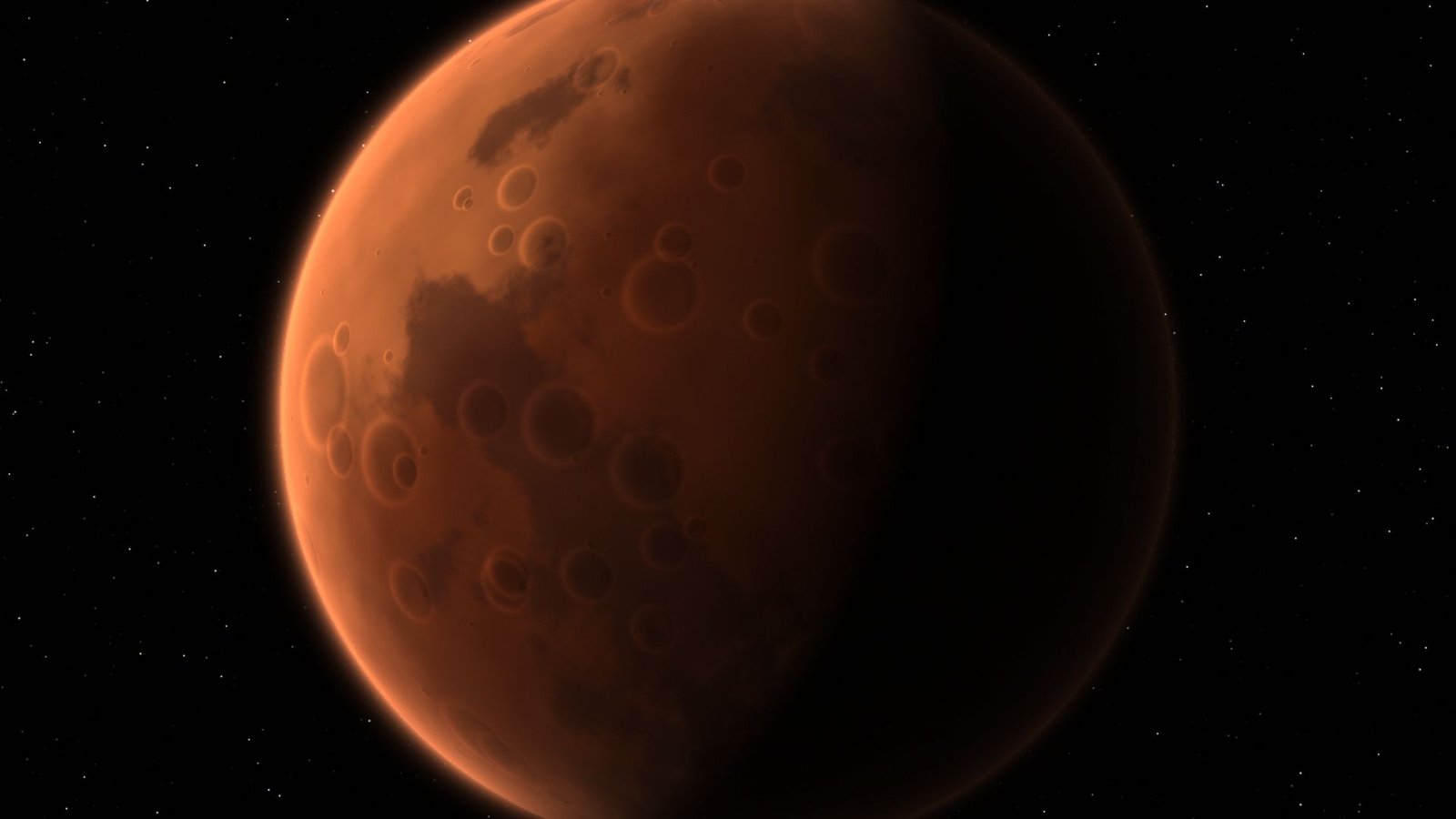
Mars, illustration
Learning Academy
Academic Partners
We are building relationships with universities and research institutes to review our curriculum
and, in time, to offer pathways to formal credit.
Curriculum review
Universities
Departments of physics, astronomy and aerospace engineering reviewing syllabi.
Research access
Research institutes
Shared datasets, guest lectures and supervised student projects.
Pathways
Credit and progression
Formal credit routes will be announced only once agreed in writing.